Science
Top 15 in Science
Week of August 24, 2026
Top 15 in Science
Week of August 24, 2026

by Sara Blair
"The Harlem riot of 1935 not only signaled the end of the Harlem Renaissance; it made black America's cultural capital an icon for the challenges of American modernity. Luring photographers interested in socially conscious, journalistic and aesthetic representation, post-Renaissance Harlem helped give rise to America's full-blown image culture and its definitive genre, documentary. Arguing for Harlem as a crossroads between writers and the image, Sara Blair explores its power for canonical writers, whose work was responsive to the changing meanings and uses of photographs. She examines literary engagements with photography from the 1930s to the 1970s and beyond." --Book Jacket.
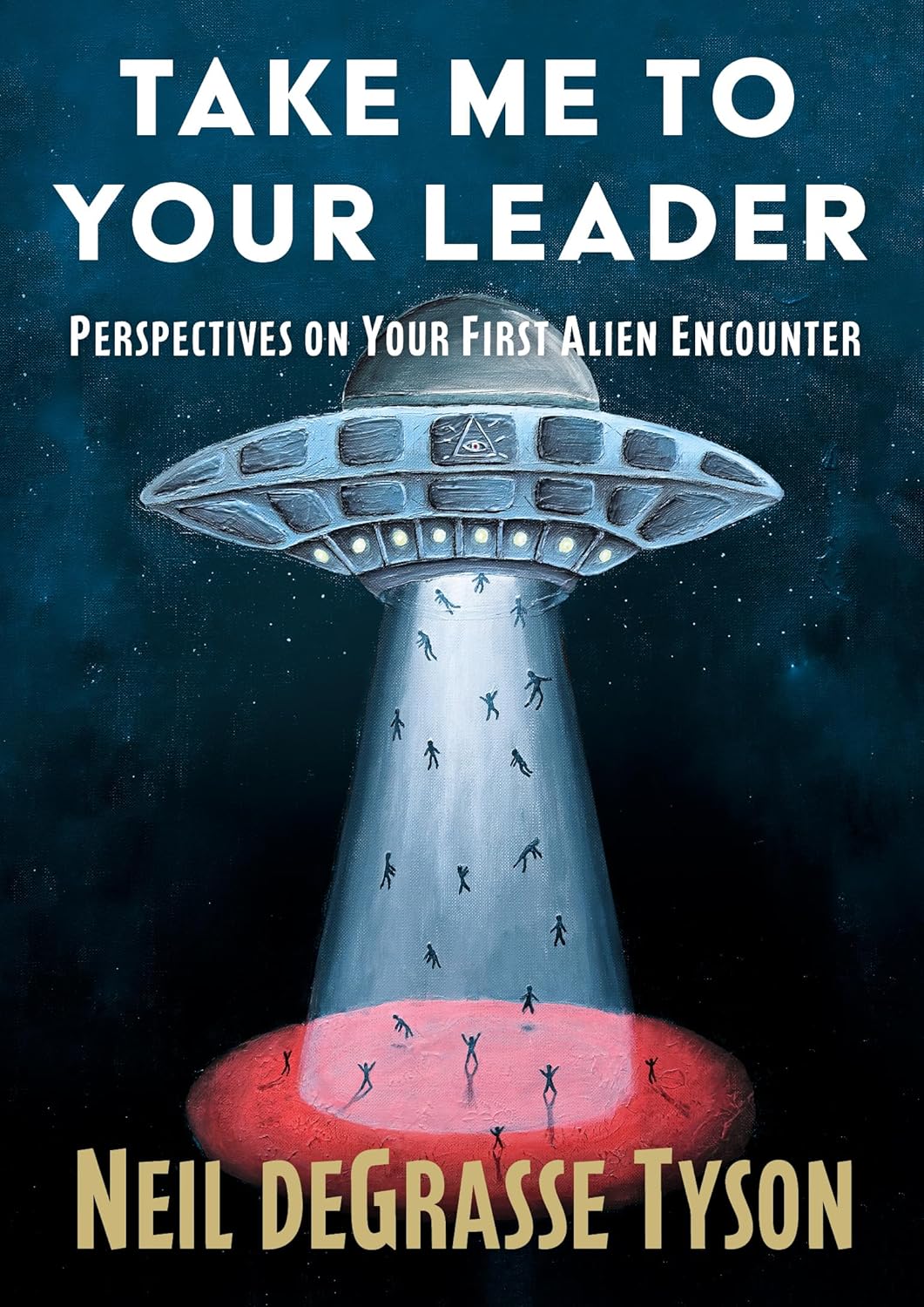
by Neil deGrasse Tyson
The culmination of a lifetime of fascination and speculation, Tyson applies the universal laws of physics to make the case for what aliens might look like, act like, how they might travel, what they might think. Should such an event occur, Tyson offers useful etiquettte tips for your first close encounter.

by Thomas A. Bass
The author of The Eudaemonic Pie now reveals the inspiration, motivations, and aspirations of the world's greatest scientists. The scientists interviewed in this collection have changed the rules of the game--altered our perception of reality and the language used to describe it.

by Navjot S. Sodhi
Conservation Biology for All provides cutting-edge but basic conservation science to a global readership. A series of authoritative chapters have been written by the top names in conservation biology with the principal aim of disseminating cutting-edge conservation knowledge as widely as possible. Important topics such as balancing conversion and human needs, climate change, conservation planning, designing and analyzing conservation research, ecosystem services, endangered species management, extinctions, fire, habitat loss, and invasive species are covered. Numerous textboxes describing additional relevant material or case studies are also included. The global biodiversity crisis is now unstoppable; what can be saved in the developing world will require an educated constituency in both the developing and developed world. Habitat loss is particularly acute in developing countries, which is of special concern because it tends to be these locations where the greatest species diversity and richest centres of endemism are to be found. Sadly, developing world conservation scientists have found it difficult to access an authoritative textbook, which is particularly ironic since it is these countries where the potential benefits of knowledge application are greatest. There is now an urgent need to educate the next generation of scientists in developing countries, so that they are in a better position to protect their natural resources.

by Joseph Warren Dauben
One of the greatest revolutions in mathematics occurred when Georg Cantor (1845-1918) promulgated his theory of transfinite sets. This revolution is the subject of Joseph Dauben's important studythe most thorough yet writtenof the philosopher and mathematician who was once called a "corrupter of youth" for an innovation that is now a vital component of elementary school curricula. Set theory has been widely adopted in mathematics and philosophy, but the controversy surrounding it at the turn of the century remains of great interest. Cantor's own faith in his theory was partly theological. His religious beliefs led him to expect paradoxes in any concept of the infinite, and he always retained his belief in the utter veracity of transfinite set theory. Later in his life, he was troubled by recurring attacks of severe depression. Dauben shows that these played an integral part in his understanding and defense of set theory.

by Hans Moravec
"A dizzying display of intellect and wild imaginings by Moravec, a world-class roboticist who has himself developed clever beasts . . . Undeniably, Moravec comes across as a highly knowledgeable and creative talent--which is just what the field needs".--Kirkus Reviews.

by Max Born
A Nobel Prize-winning physicist explains the historical background and scientific principles of Einstein's famous theory
by Paul Robbins
An accessible, focused exploration of the field of political ecology The third edition of Political Ecology spans this sprawling field, using grounded examples and careful readings of current literature. While the study of political ecology is sometimes difficult to fathom, owing to its breadth and diversity, this resource simplifies the discussion by reducing the field down into a few core questions and arguments. These points clearly demonstrate how critical theory can make pragmatic contributions to the fields of conservation, development, and environmental management. The latest edition of this seminal work is also more closely focused, with references to recent work from around the world. Further, Political Ecology raises critical questions about “traditional” approaches to environmental questions and problems. This new edition: Includes international work in the field coming out of Europe, Latin America, and Asia Explains political ecology and its tendency to disrupt the environmental research and practice by both advancing and undermining associated fields of study Contains contributions from a wide range of diverse backgrounds and expertise Offers a resource that is written in highly-accessible, straightforward language Outlines the frontiers of the field and frames climate change and the end of population growth with the framework of political ecology An excellent resource for undergraduates and academics, the third edition of Political Ecology offers an updated edit

by Gina Bari Kolata
"Scientists have recently discovered shards of the flu virus in human remains frozen in the Arctic tundra and in scraps of tissue preserved in a government warehouse. In Flu, Gina Kolata, reporter for The New York Times, unravels the mystery of this lethal virus with the high drama of a great adventure story. From Alaska to Norway, from the streets of Hong Kong to the corridors of the White House, Kolata tracks the race to recover the live pathogen and probes the fear that has impelled government policy. She delves into the history of the flu and previous epidemics, profiles the experts hot on the trail and the amateurs woefully misguided, and details the science and the latest understanding of this mortal disease."--BOOK JACKET.Title Summary field provided by Blackwell North America, Inc. All Rights Reserved

by Charles Coulston Gillispie
By the end of the eighteenth century, the French dominated the world of science. And although science and politics had little to do with each other directly, there were increasingly frequent intersections. This is a study of those transactions between science and state, knowledge and power--on the eve of the French Revolution. Charles Gillispie explores how the links between science and polity in France were related to governmental reform, modernization of the economy, and professionalization of science and engineering.
by Juan M Bilbao
Peripheral nerve analysis is a challenging task for pathologists, given the advent of new diagnoses and techniques of analysis and the impact of molecular genetics. This book presents a simple, logical method for constructing a differential diagnosis based on pathology and clinical presentation. It also provides advice on the selection of ancillary molecular, immunohistochemical and genetic techniques to establish a definitive diagnosis. Clear, authoritative guidance is offered on diagnosis of the full range of neuropathies with the aid of a wealth of high-quality color photomicrographs and electron micrographs. The pathologist will benefit greatly from the identification of a variety of artifacts and normal structures occasionally encountered in nerve biopsies that need to be distinguished from specific pathologic alterations. This user-friendly, practical text will be an invaluable aid in achieving the most specific diagnosis possible.

by Rachel Carson
Presents Rachel Carson's 1962 environmental classic "Silent Spring," which identified the dangers of indiscriminate pesticide use; and includes an introduction by biographer Linda Lear and an afterword by scientist Edward O. Wilson.
by Stephen P. Maran
When the International Astronomical Union (IAU) adopted a new definition of a "planet" in August 2006, Pluto became a dwarf planet, drawing a divisive line in science and public opinions. The controversy of whether Pluto is a planet continues years later, and passion about the decision remains, pitting scientist against scientist and invoking sentiments and nostalgia from the rest of the world. With the IAU definition, the future of space objects is forever changed. Learn how this resolution came to be and what it means for astronomy, who implemented it and who is against it, and whether it's the first or millionth time the world's view of astronomy has rotated on its axis. Written by an astronomer and educator who voted for the IAU resolution—Laurence A. Marschall—and a NASA scientist who supported the opposing petition that resulted—Stephen P. Maran—Pluto Confidential leaves no perspective out and no asteroid unturned in the Pluto debate. A telescopic look inside the book: History of planetary disputes, including why Jupiter almost wasn't acknowledged What Bode's Law is and how it has influenced observations Who discovered Pluto and how it was named The Kuiper Belt and its role in what it means to be a planet Beyond Pluto and the eight distinguished planets
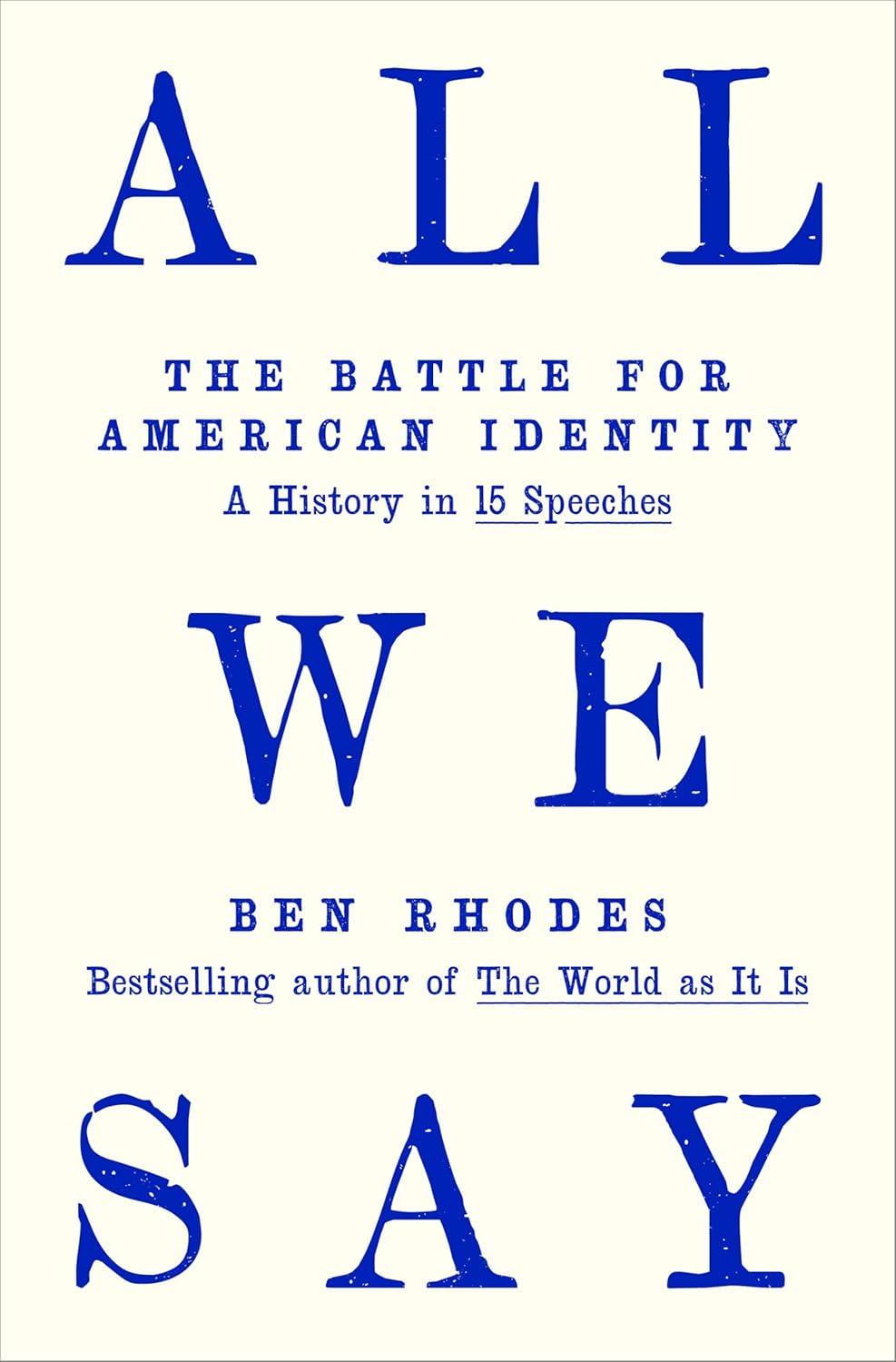
by Ben Rhodes
What does it mean to be American? Who gets to decide? This sweeping history of the United States told through fifteen speeches relives the battle over American identity, from a New York Times bestselling author and one of President Barack Obama’s former speechwriters. “At a time of moral and political drift, Ben Rhodes reminds us what American greatness actually sounds like, and what it means.”—Ayad Akhtar, author of Homeland Elegies For 250 years, we have debated what it means to be American. This question shaped the compromises in our Constitution and the arguments we’ve been having ever since—spawning abolitionism, secession, and civil war; populism, mass migration, and global leadership; movements for reform and the backlashes to them. In All We Say, Ben Rhodes tells the story of fifteen speeches—some iconic, others long forgotten—which have both shaped and reflected the argument Americans have been having from our founding to the intense divisions of our time. Through riveting and beautifully rendered accounts of the people, movements, and moments that produced these speeches, Rhodes traces the history of our battle over identity. The result is a singular and revealing portrait of America itself: a nation divided between two stories—one of inheritance, power, and exclusion, the other of equality, striving, and belonging. Drawing on a decade writing for Barack Obama, Rhodes also shows us how words can redirect a nation, what makes a speech enduring, and why oratory is a unique form of persuasion in American democracy. From Benjamin Franklin’s call for compromise at the Constitutional Convention, to Alexander Stephens’ case for white supremacy as the cornerstone of the Confederacy;.
