History
Top 15 in History
Week of August 24, 2026
Top 15 in History
Week of August 24, 2026

by Jorunn Jacobsen Buckley
The Mandaeans were a gnostic sect that arose in the Middle East around the same time as Christianity. This text examines the lives and religion of contemporary Mandaeans and provides an introduction to the religion, showing how its ancient texts inform the living religion, and vice versa.

by Booker T. Washington
Up From Slaveryis one of the most widely read African American autobiographies in the English language. It details how prominent African American leader Booker T. Washington rose from slavery to become one of the nation’s most prominent orators and educators at the turn of the 20th century. This reprint of the original 1901 edition is enhanced by 12 related documents and an essay by W. Fitzhugh Brundage that provides students with the necessary background and context to appreciate the role of Up From Slavery in American history. It addresses Washington’s life and career, criticisms of Washington from within the African American community, the social and political context in which the book was published, reactions to its publication, and the ways in which Washington carefully crafted his autobiography to further his cause among white audiences. Document headnotes, a chronology of Washington’s life, questions for consideration, and a selected bibliography provide further pedagogical support.

by Helen Thomas
White House journalist for more than five decades chronicles her work covering all of the presidents since John F. Kennedy. Shares personal reminiscences of the U.S. leaders as well as of the first ladies. Bestseller.

by Philip Freeman
In the first authoritative biography of Alexander the Great written for a general audience in a generation, classicist and historian Philip Freeman tells the remarkable life of the great conqueror. The celebrated Macedonian king has been one of the most enduring figures in history. He was a general of such skill and renown that for two thousand years other great leaders studied his strategy and tactics, from Hannibal to Napoleon, with countless more in between. He flashed across the sky of history like a comet, glowing brightly and burning out quickly: crowned at age nineteen, dead by thirty-two. He established the greatest empire of the ancient world; Greek coins and statues are found as far east as Afghanistan. Our interest in him has never faded. Alexander was born into the royal family of Macedonia, the kingdom that would soon rule over Greece. Tutored as a boy by Aristotle, Alexander had an inquisitive mind that would serve him well when he faced formidable obstacles during his military campaigns. Shortly after taking command of the army, he launched an invasion of the Persian empire, and continued his conquests as far south as the deserts of Egypt and as far east as the mountains of present-day Pakistan and the plains of India. Alexander spent nearly all his adult life away from his homeland, and he and his men helped spread the Greek language throughout western Asia, where it would become the lingua franca of the ancient world. Within a short time after Alexander’s dea

by C. S. Lewis
Hailed as "the final memorial to the work of a great scholar and teacher and a wise and noble mind," this work paints a lucid picture of the medieval world view, as historical and cultural background to the literature of the Middle Ages and Renaissance.

by James L. Gelvin
"A novel study. Mass politics are central to our century, and Gelvin brings them to life in a readable narrative. This book adds a new dimension to an ongoing and important debate in the field."—Leila Fawaz, author of An Occasion for War

by Francine Du Plessix Gray
Tatiana du Plessix, the wife of a French diplomat, was a beautiful, sophisticated "white Russian" who had been the muse of the famous Russian poet Vladimir Mayakovsky. Alexander Liberman, the ambitious son of a prominent Russian Jew, was a gifted magazine editor and aspiring artist. As part of the progressive artistic Russian émigré community living in Paris in the 1930s, the two were destined to meet. They began a passionate affair, and the year after Paris was occupied in World War II they fled to New York with Tatiana's young daughter, Francine. There they determinedly rose to the top of high society, holding court to a Who's Who list of the midcentury's intellectuals and entertainers. Flamboyant and outrageous, bold and brilliant, they were irresistible to friends like Marlene Dietrich, Salvador Dalí, and the publishing tycoon Condé Nast. But to those who knew them well they were also highly neurotic, narcissistic, and glacially self-promoting, prone to cut out of their lives, with surgical precision, close friends who were no longer of use to them. Tatiana became an icon of New York fashion, and the hats she designed for Saks Fifth Avenue were de rigueur for stylish women everywhere. Alexander Liberman, who devotedly raised Francine as his own child from the time she was nine, eventually came to preside over the entire Condé Nast empire. The glamorous life they shared was both creative and destructive and was marked by an exceptional bond forged out of their highly charg

by Neal Bascomb
With the intrigue of a detective story, "Hunting Eichmann" follows the Nazi as he escapes two American POW camps, hides in the mountains, and builds an anonymous life in Buenos Aires, before finally being captured and brought to trial.

by Robert K. Massie
Biography of Catherine II (1729-1796), 'the Great', empress of Russia from 1762 till 1796.

by Roderick D. Bush
An "Indispensable" Book of The Black World Today website A fresh new look at the Black Power movement and its leaders Much has been written about the Black Power movement in the United States. Most of this work, however, tends to focus on the personalities of the movement. In We Are Not What We Seem, Roderick D. Bush takes a fresh look at Black Power and other African American social movements with a specific emphasis on the role of the urban poor in the struggle for Black rights. Bush traces the trajectory of African American social movements from the time Booker T. Washington to the present, providing an integrated discussion of class. He addresses questions crucial to any understanding of Black politics: Is the Black Power movement simply another version of the traditional American ethnic politics, or does it have wider social import? What role has the federal government played in implicitly grooming social conservatives like Louis Farrakhan to assume leadership positions as opposed to leftist, grassroots, class-oriented leaders? Bush avoids the traditional liberal and social democratic approaches in favor of a more universalistic perspective that offers new insights into the history of Black movements in the U.S.
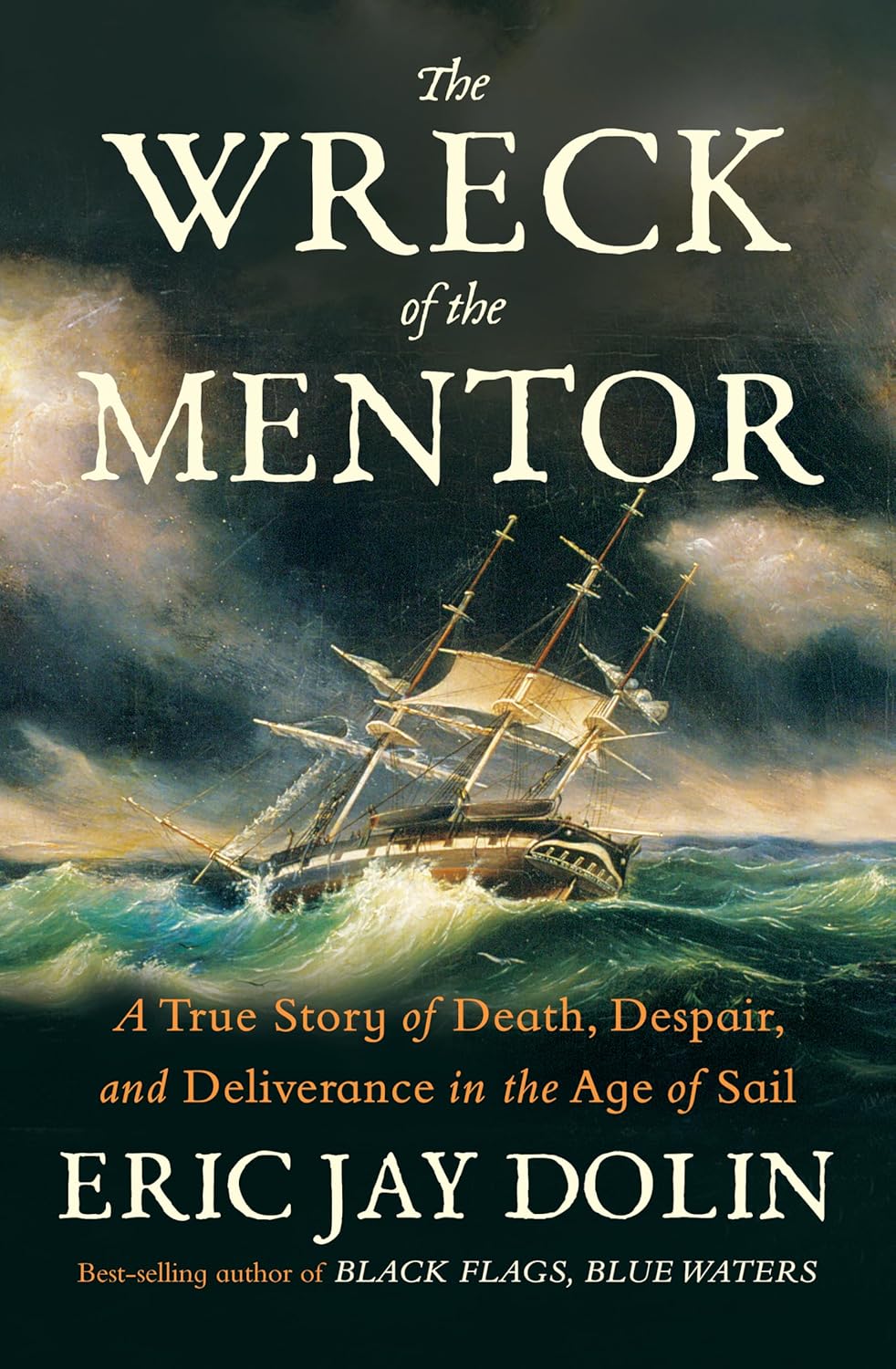
by Eric Jay Dolin
New York Times - "The Nonfiction Everyone Will Be Talking About in 2026" An astonishing true story--one of the most gripping maritime sagas of the nineteenth century--told by our era's "expert literary steersman" (Washington Post).
by Bill McWilliams
The author of A Return to Glory constructs a compellingly detailed and panoramic history of the fateful day that ushered the United States into WWII. Using long-established historical records and contemporary journals, as well as recently released wartime documents, Bill McWilliams has created a brand-new minute-by-minute narrative of the Day That Will Live in Infamy. Told from the points of view of dozens of characters, from generals and admirals and politicians and diplomats down to deckhands and private soldiers and innocent civilians at all levels, this panoramic overview of one of the most traumatizing and shocking events in American history puts the reader in a position to understand the big picture of strategy and tactics, as well as the intimate details of what the chaos, violence, and presence of death felt like to people immersed in the surprise of an armed attack on American soil. December 7, 1941, was a turning point in the history of the United States, which had been teetering on a decision between isolationism and intervention. One might argue that every US military engagement since then has been affected by what happened when America learned that it could not stand by and watch war among strangers without potentially becoming involved—whether we wished to or not.

by Neil Baldwin
Meticulously researched and entertainingly written, this will make readers, regardless of their politics, proud of America's intellectual heritage over the past 400 years.

by Tan Koon San
Dynastic China: An Elementary History surveys four millennia of China’s history. It traced commentaries from the mythological period of Pangu, creator of the Chinese universe, and the Goddess Nuwa, creator of the Chinese people, through to the legendary periods of the Xia, Shang and Zhou dynasties to subsequent succeeding dynasties from the Qin Dynasty (221 BC) to the end of the Qing Dynasty (1912 AD). It weaved through brutal political intrigues and conspiracies of China’s imperial existence. The persistent enthronement of child emperors for the benefits of power-hungry eunuchs, dowagers, members of the imperial clans, generals and warlords formed a large part of the narrative. Encrypted within are salient elements of Chinese philosophical precepts, civilisation values, and political ideals. The core concepts that mould the idea of tian xia 天 下 (all under heaven) and tian ming 天 命 (Mandate of Heaven), and how these guided Chinese perception of their world are painstakingly explained. The profound influence of Confucianism and the functional adoption of the Legalist framework in statecraft are imparted in the context of practicality and idealism. So too is the complementary notion of natural dualities, the Yin-Yang (阴 阳) harmony of contradictions. How these filtered through from philosophy to cultural values are deftly introduced. Imperial obsessions with frontier threats are also incisively presented. So are the diplomatic statecraft of matrimonial kinship, tributary exchang

by John Fraser Hart
Few Americans know much about contemporary farming, which has evolved dramatically over the past few decades. In The Changing Scale of American Agriculture, the award-winning geographer and landscape historian John Fraser Hart describes the transformation of farming from the mid-twentieth century, when small family farms were still viable, to the present, when a farm must sell at least $250,000 of farm products each year to provide an acceptable level of living for a family. The increased scale of agriculture has outmoded the Jeffersonian ideal of small, self-sufficient farms. In the past farmers kept a variety of livestock and grew several crops, but modern family farms have become highly specialized in producing a single type of livestock or one or two crops. As farms have become larger and more specialized, their number has declined. Hart contends that modern family farms need to become integrated into tightly orchestrated food-supply chains in order to thrive, and these complex new organizations of large-scale production require managerial skills of the highest order. According to Hart, this trend is not only inevitable, but it is beneficial, because it produces the food American consumers want to buy at prices they can afford. Although Hart provides the statistics and clear analysis such a study requires, his book focuses on interviews with farmers: those who have shifted from mixed crop-and-livestock farming to cash-grain farming in the Midwest agricultural heartland; b