Combined Print & E-Book Nonfiction
Top 15 in Combined Print & E-Book Nonfiction
Week of August 3, 2026
1

London Falling: A Mysterious Death in a Gilded City and a Family's Search for Truth
by Patrick Radden Keefe
New this week
Top 15 in Combined Print & E-Book Nonfiction
Week of August 3, 2026
by Patrick Radden Keefe
From the bestselling, prize-winning author of Say Nothing and Empire of Pain, a spellbinding account of a family devastated by the sudden death of their nineteen year-old son, only to discover that he had created a secret life which drew him into the dangerous criminal underworld that lies beneath London's glittering surface In the early morning of November 29th, 2019, surveillance cameras at the headquarters of MI6, Britain's spy agency, captured video of a young man pacing back and forth on a high balcony of Riverwalk, a luxury tower on the bank of the river Thames. At 2:24 a.m., he jumped into the river. In a quiet London neighborhood several miles away, Rachelle Brettler was worried about her son. Zac had told her that he had gone to stay with a friend, but then he did not come home. Days later, a police car pulled up and two officers relayed the dreadful news: Her son was dead. In their unbearable grief, Rachelle and her husband Matthew struggled to understand what had happened to Zac.
by JD Vance
From the bestselling author of Hillbilly Elegy—an intimate account of why Vice President JD Vance strayed from the Christianity of his youth and what led him back to faith. Communion is a spiritual exploration of what it means to be a Christian in all the seasons of life JD Vance has experienced—as a child, a young man, a husband, a father, and a leader. Picking up in some ways where Hillbilly Elegy left off, Communion recounts how Vance's pursuit of material privileges ultimately led him into a secular wilderness. Communion reveals how Vance regained his faith and discusses his conversion to Catholicism, how his faith guides his work in public life, and how it shapes his thoughts about the future.

by David Sedaris
In THE LAND AND ITS PEOPLE, his first new collection since HAPPY-GO-LUCKY, David Sedaris reflects on what it means to be a foreigner, a brother, a lifelong friend. He tries on the role of caretaker after his boyfriend Hugh's hip-replacement surgery, and both succeeds and fails. He buys his sister a cape and discusses his brother with a jaded Duolingo bot. He walks dozens of miles with his friend Dawn and challenges her to eat a truck tire. Ever adding to his list of "Countries I Have Been To," he rides a horse named Tequila in Guatemala, buys a bespoke priest's cassock in Vatican City, and goes on safari in Kenya without taking a single photo. There is sadness here--scrolling through his address book, he realizes how many dear friends are now deceased--but also delight: he revels in authors' biographies, the malapropism that becomes a decades-long inside joke, and pair of well-made cotton underpants. He is bitten by a dog. A train passenger vomits in his face. A woman on the street late at night either sexually harasses him or doesn't. Look how hard it is to be alive! Throughout these essays--at once acerbic and tender, playful and profound--Sedaris shows how much there is to marvel at when you keep your head up and your eyes open, observing with warmth and curiosity this fascinating human species and the lands we inhabit.
by Thayil Kim
The memoir by co-founding member of Soundgarden and lead guitarist Kim Thayil about one of the 1990s' signature rock bands From Soundgarden's humble beginnings manifesting grunge in Seattle's beer-soaked punk clubs to their revered status today as rock icons, the band's journey has been nothing short of extraordinary. In A Screaming Life, founding member and guitar god Kim Thayil goes backstage to introduce the band that fearlessly pushed the boundaries of rock, invented a new genre, and amassed fervent fans from every corner of the world. Thayil shares the story of how he and his Soundgarden bandmates--Hiro Yamamoto, Ben Shepherd, Matt Cameron, and Chris Cornell--faced the triumphs and challenges on the road to their meteoric rise. His storytelling channels the essence of Soundgarden's era-defining sound--one that's supercharged with raw creativity and unapologetic lyrics--and explores the ways that Soundgarden was shaped by the diverse backgrounds of its creators: Thayil's Indian heritage and founding bassist Hiro Yamamoto's Japanese background added unique dimensions to the band's identity, influencing not only their music but also their experiences in the industry. For Soundgarden fans and '90s alternative rock enthusiasts, A Screaming Life not only gives behind-the-scenes access to one of the most revered bands, but it also demonstrates the power music and its creators have to transform culture.
by Neil deGrasse Tyson
The culmination of a lifetime of fascination and speculation, Tyson applies the universal laws of physics to make the case for what aliens might look like, act like, how they might travel, what they might think. Should such an event occur, Tyson offers useful etiquettte tips for your first close encounter.
by Eric Jay Dolin
New York Times - "The Nonfiction Everyone Will Be Talking About in 2026" An astonishing true story--one of the most gripping maritime sagas of the nineteenth century--told by our era's "expert literary steersman" (Washington Post).

by Belle Burden
INSTANT #1 NEW YORK TIMES BESTSELLER • “Burden’s searing, probing memoir explores . . . what she learned about intimacy and her own spirit.”—People “A beautifully written instant classic. Strangers is gripping and heartbreaking and a must-read for every wife—and husband.”—Graydon Carter “Asks us to examine life’s most perplexing questions: Can we see the invisible fault lines in a marriage or truly know the people closest to us?”—Lori Gottlieb It was a great love story, one for the ages. The speed of our beginning and the speed of our ending felt like matching bookends. They both came out of nowhere. He wanted it, he wanted me. And then he didn’t. In March 2020, Belle Burden was safe and secure with her family at their house on Martha’s Vineyard, navigating the early days of the pandemic together—building fires in the late afternoons, drinking whisky sours, making roast chicken. Then, with no warning or explanation, her husband of twenty years announced that he was leaving her. Overnight, her caring, steady partner became a man she hardly recognized. He exited his life with her like an actor shrugging off a costume. In Strangers, Burden revisits her marriage, searching for clues that her husband was not who she always thought he was. As she examines her relationship through a new lens, she reckons with her own family history and the lessons she intuited about how a woman is expected to behave in the face of betrayal. Through all of it, she is transformed. The discreet, compliant woman she once was—someone nicknamed “Belle the Good”—gives way to someone braver, someone determined to use her voice. With unflinching honesty and profound grace, Burden charts a path through heartbreak to show the power of a woman who refuses to give up on love. Strangers is a stunning, deeply moving, compulsively readable memoir heralding the arrival of a thrilling new literary talent.
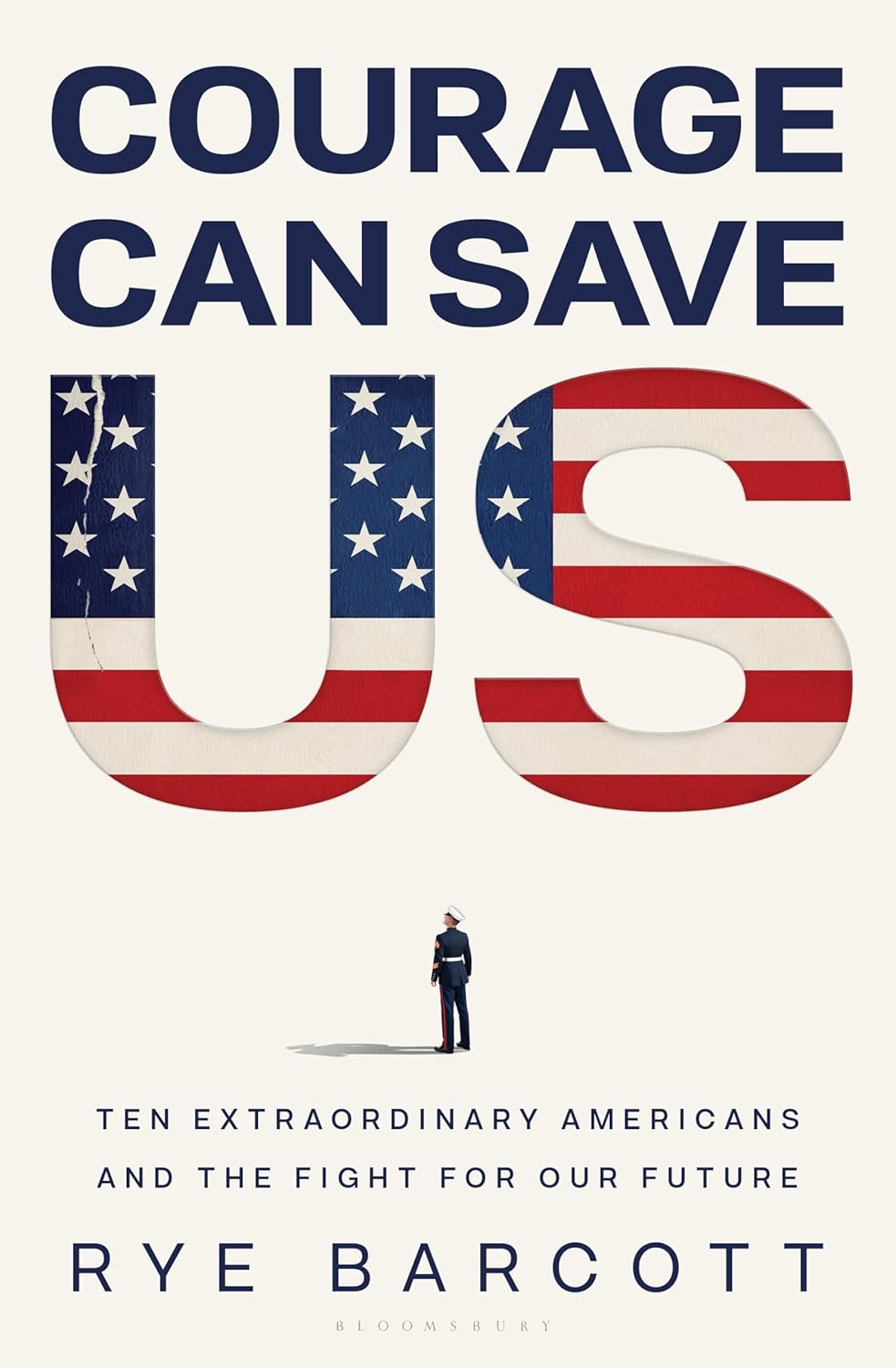
by Rye Barcott
When most Americans think of acts of courage, elected office is rarely the first place they look. And while more Americans than ever reject party labels, the political arena remains dominated by the loudest voices at each extreme. This moment demands leaders willing to govern across party lines, resist the incentives of modern politics, and choose courage over outrage. One group is uniquely suited to meet that challenge: America's veterans. Courage Can Save US follows nine veterans and a former FBI agent-five Democrats and five Republicans-who have carried the ethic of service from the battlefield into public life. Ambitious and altruistic, forthright and flawed, they confront the moral and personal costs of leadership in an unsettled age: public attacks, private doubt, and the risk of losing everything they have worked for in service of the common good. More than a collection of political profiles, Courage Can Save US is a portrait of a bipartisan generation of post-9/11 leaders striving to rise above polarization and a culture of contempt. It is an examination of courage in its many forms-and a challenge to all of us to consider how courage can strengthen our democracy, and our own lives.

by Bessel A. Van der Kolk
Originally published by Viking Penguin, 2014.

by Jonathan Haidt
THE INSTANT #1 NEW YORK TIMES BESTSELLER • A Wall Street Journal Top 10 Book of 2024 • A New York Times and Washington Post Notable Book • One of Barack Obama's Favorite Books of 2024 • A TIME 100 Must-Read Book of 2024 • Named a Best Book of 2024 by the Economist, the New York Post, and Town & Country • The Goodreads Choice Award Nonfiction Book of the Year A must-read for all parents: the generation-defining investigation into the collapse of youth mental health in the era of smartphones, social media, and big tech—and a plan for a healthier, freer childhood. “With tenacity and candor, Haidt lays out the consequences that have come with allowing kids to drift further into the virtual world . . . While also offering suggestions and solutions that could help protect a new generation of kids.” —Shannon Carlin, TIME, 100 Must-Read Books of 2024 After more than a decade of stability or improvement, the mental health of adolescents plunged in the early 2010s. Rates of depression, anxiety, self-harm, and suicide rose sharply, more than doubling on many measures. Why? In The Anxious Generation, social psychologist Jonathan Haidt lays out the facts about the epidemic of teen mental illness that hit many countries at the same time. He then investigates the nature of childhood, including why children need play and independent exploration to mature into competent, thriving adults.
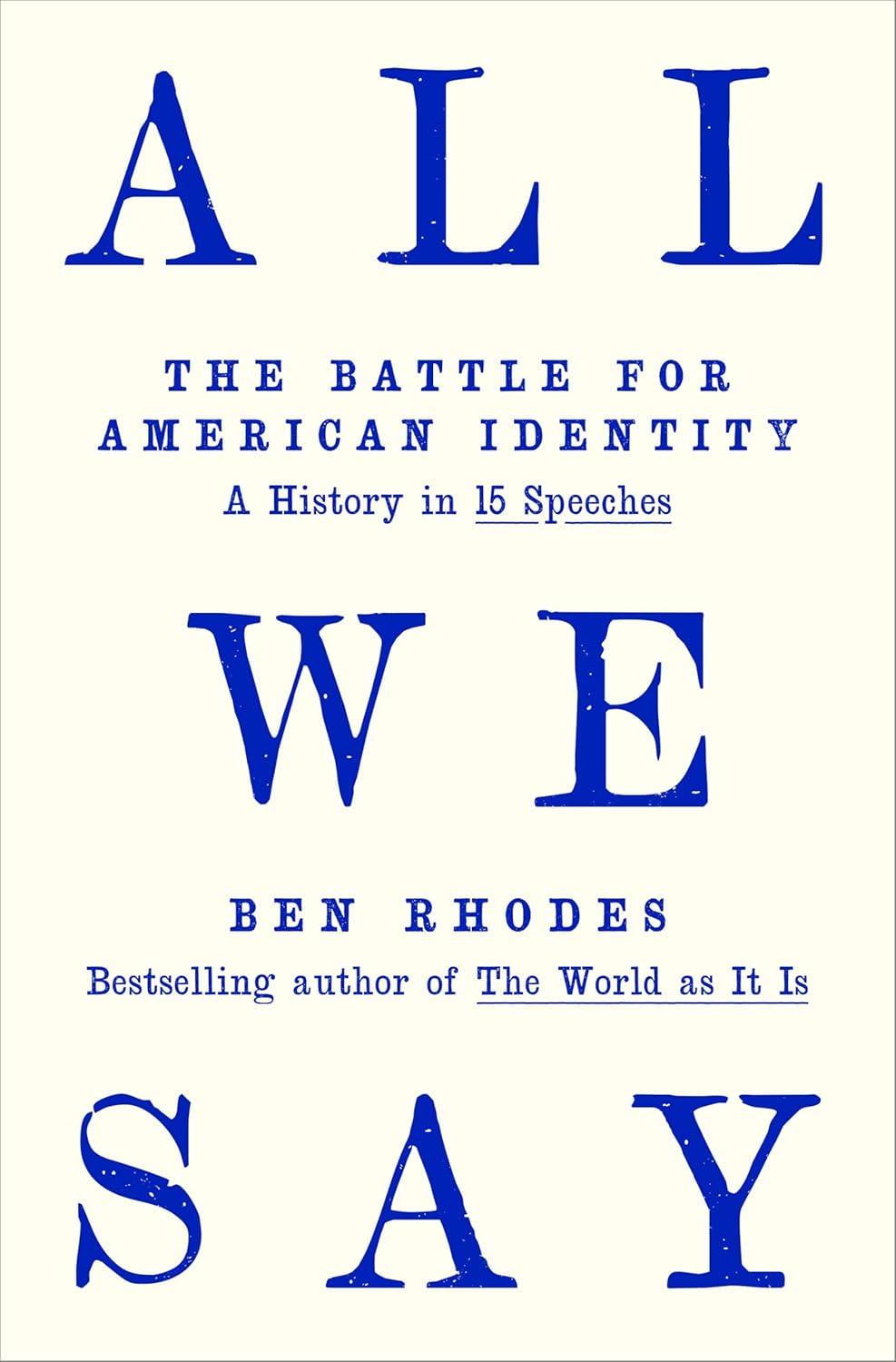
by Ben Rhodes
What does it mean to be American? Who gets to decide? This sweeping history of the United States told through fifteen speeches relives the battle over American identity, from a New York Times bestselling author and one of President Barack Obama’s former speechwriters. “At a time of moral and political drift, Ben Rhodes reminds us what American greatness actually sounds like, and what it means.”—Ayad Akhtar, author of Homeland Elegies For 250 years, we have debated what it means to be American. This question shaped the compromises in our Constitution and the arguments we’ve been having ever since—spawning abolitionism, secession, and civil war; populism, mass migration, and global leadership; movements for reform and the backlashes to them. In All We Say, Ben Rhodes tells the story of fifteen speeches—some iconic, others long forgotten—which have both shaped and reflected the argument Americans have been having from our founding to the intense divisions of our time. Through riveting and beautifully rendered accounts of the people, movements, and moments that produced these speeches, Rhodes traces the history of our battle over identity. The result is a singular and revealing portrait of America itself: a nation divided between two stories—one of inheritance, power, and exclusion, the other of equality, striving, and belonging. Drawing on a decade writing for Barack Obama, Rhodes also shows us how words can redirect a nation, what makes a speech enduring, and why oratory is a unique form of persuasion in American democracy. From Benjamin Franklin’s call for compromise at the Constitutional Convention, to Alexander Stephens’ case for white supremacy as the cornerstone of the Confederacy;.
by Lena Dunham
In this rowdy, frank reflection on illness, fame, sex, and everything in between, the remarkable mind behind the hit series Girls and the bestselling author of Not That Kind of Girl asks whether fulfilling her creative ambitions has been worth the pain. For the last decade, as she’s spent countless hours in doctor’s waiting rooms searching for diagnoses, treatments, and relief, being the owner and operator of Lena Dunham’s body has felt, as she puts it, “like towing a wrecked car across town at midnight.” It’s not easy dragging a wrecked car anywhere, much less to the Met Gala while sewn into a gold lamé corset. Or to the set of the hit show that you—as a twenty-five-year-old—are writing, directing, producing, and starring in. Or to the White House, the Golden Globes, or your publicist’s office to discuss the latest internet disaster

by Barbara McQuade
The New York Times bestselling author and former U.S. Attorney offers a piercing exposé on the escalating threat of far-right politics—and a clear roadmap for saving our democracy. In The Fix, McQuade draws on her decades of experience as a federal prosecutor to reveal how systems of organized crime and political opportunism exploit the levers of power—using corruption, cruelty, and chaos as tools to dominate institutions and eliminate accountability. With clarity, precision, and moral force, she exposes the tactics of today’s far-right MAGA system: information warfare, aggressive retribution, conformism enforced by fear, and pervasive dismantling of legal checks and balances necessary to defend the public interest and uphold justice. Weaving together courtroom stories, real-time political analysis, and cautionary lessons from history and democratic backsliding abroad, McQuade makes the case that the threats we face are not future possibilities—they’re already here. Yet The Fix is not just a warning; it is a call to action. In the book’s final chapters, McQuade outlines common-sense reforms and strategies that can reclaim the rule of law and recenter democracy with the power of the people. Accessible, eye-opening, and grounded in constitutional faith, The Fix is essential reading for everyone concerned about the future of America—and ready to work together to take a stand for it.
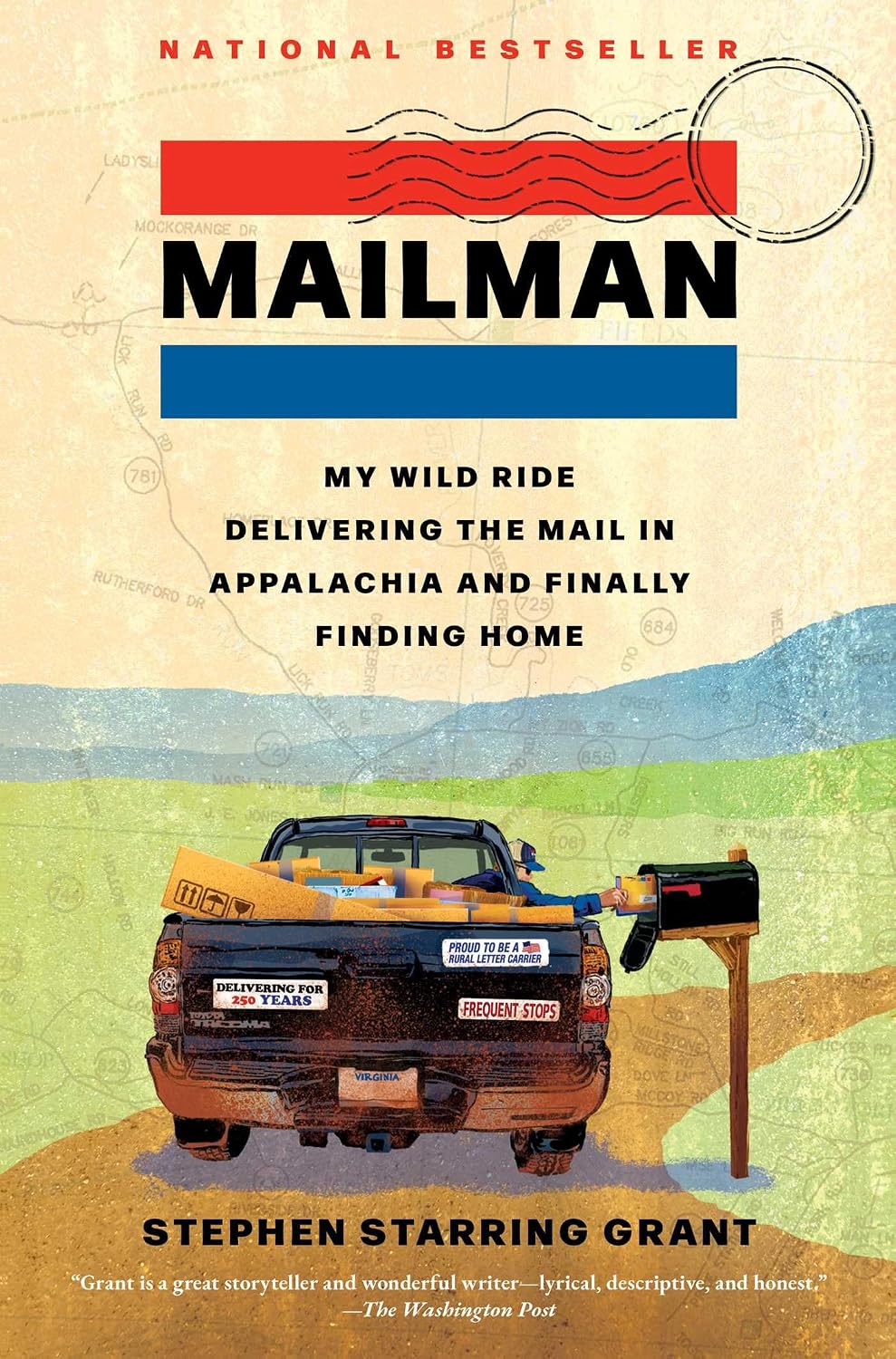
by Stephen Starring Grant
An uproarious and “utterly charming” (The Washington Post) memoir by a mailman in the Blue Ridge Mountains of Virginia, who found that working for the post office saved his life, taught him who he was, gave him purpose, and educated him deeply about a country he loves but had lost touch with. Steve Grant was laid off in March of 2020. He was fifty and had cancer, so he needed health insurance, fast. Which is how he found himself a rural letter carrier in Appalachia, back in his old hometown. Suddenly, he was the guy with the goods, delivering dog food and respirators and lube and heirloom tomato seeds and Lord of the Rings replica swords. He transported chicken feed to grandmothers living alone in the mountains and forded a creek with a refrigerator on his back. But while he carried the mail, he also carried a whole lot more than just the mail, including a family legacy of rage and the anxiety of having lost his identity along with his corporate job. And yet, slowly, surrounded by a quirky but devoted band of letter carriers, working this different kind of job, Grant found himself becoming a different kind of person. He became a lifeline for lonely people, providing fleeting moments of human contact and the assurance that our government still cares. He embraced the thrill of tackling new challenges, the pride of contributing to something greater than himself, the joy of camaraderie, and the purpose found in working hard for his family and doing a small, good thing for his community.

by Tad Stoermer
Revisit the Salem Witch Trials, the Underground Railroad, and other resistance movements of American history to get a bold new understanding of how resistance shaped our past—and how its principles can change our future. The United States was shaped by resistance—but not in the way we’ve been taught. The Revolution did not secure liberty; it opened the door to either liberty or oppression, where only white men enjoyed all of the benefits and protections of citizenship. In A Resistance History of the United States, public historian Tad Stoermer shows how from the very beginning, that tension—between the ideals of resistance and the realities of power—has defined America more than the Enlightenment ideals enshrined in the Declaration of Independence and the Constitution. Utililizing powerful storytelling to focus on key—and often lesser-known—moments in American history, this book reveals the truth of how resistance movements from Colonial times have opposed the powers that be. Stoermer covers an impressive roster of pivotal movements, with each chapter identifying a key resistance movement and principle meant to inspire contemporary readers, including: Bacon’s Rebellion/Metacomet’s War (1676) Salem Witch Trials (1692) The Black Loyalists (1783) The Underground Railroad (1850) Through these and many more examples, Stoermer dismantles the mythologies that pass for American history—exposing the curated nostalgia, moral evasions, and institutional silences that have long protected abusive power. What emerges is an essential look at how we can take lessons from the past to understand, and effectively respond to, the injustices we face today.